
Loading blogs...
Hands-on guides to AI infrastructure, MLOps, models, and shipping to production.
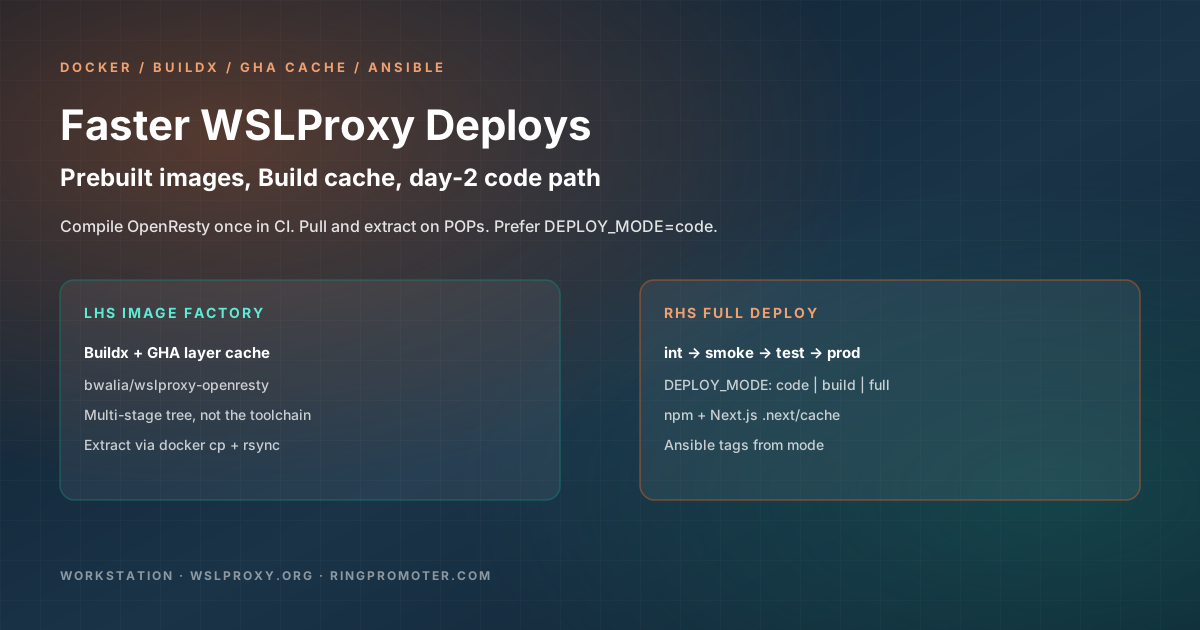
Workstation WSL Proxy: compile OpenResty once into bwalia/wslproxy-openresty, warm Buildx/GHA layers, extract on bare metal, prefer DEPLOY_MODE=code — and why AI-assisted delivery made this cross-cutting work finishable.
 Balinder WaliaRead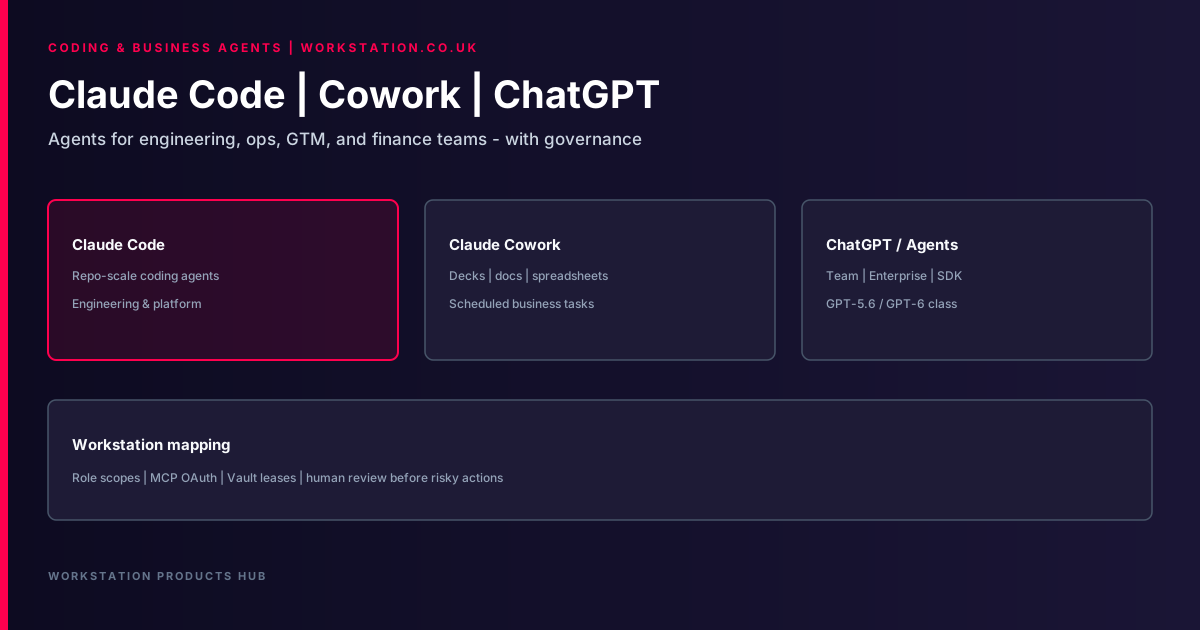
Which teams should use Claude Code, Claude Cowork, or ChatGPT/OpenAI Agents — and the controls Workstation recommends before production.
Balinder WaliaRead 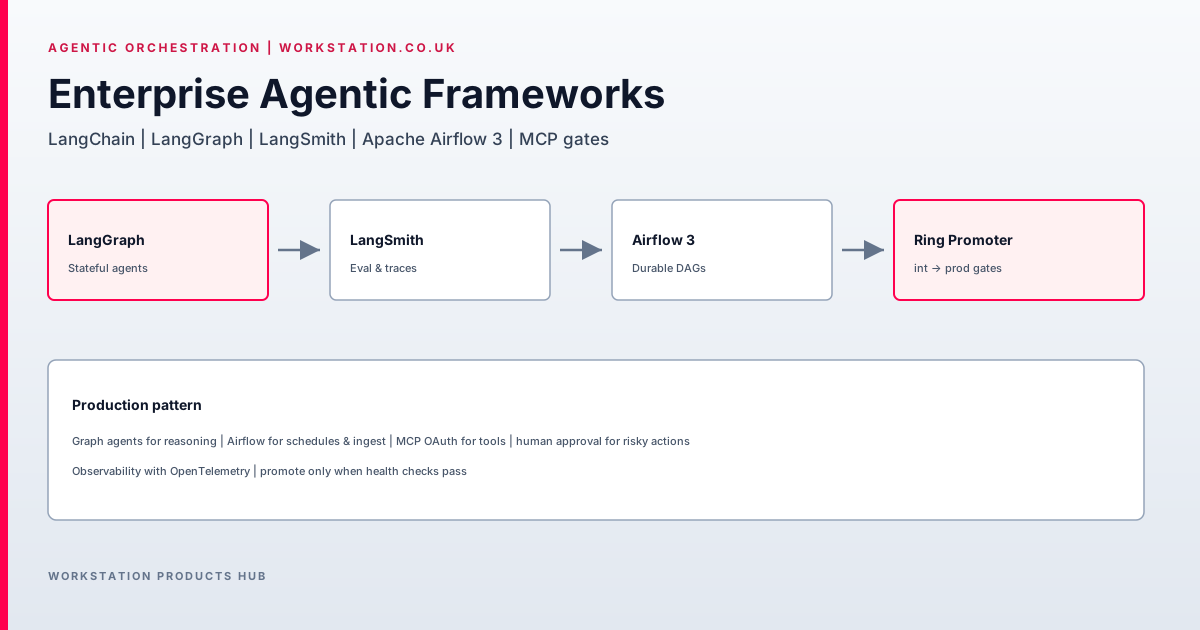
Operational guide to LangGraph agents, LangSmith evals, and Apache Airflow 3 schedules — with Workstation promotion and edge patterns.
Balinder WaliaRead 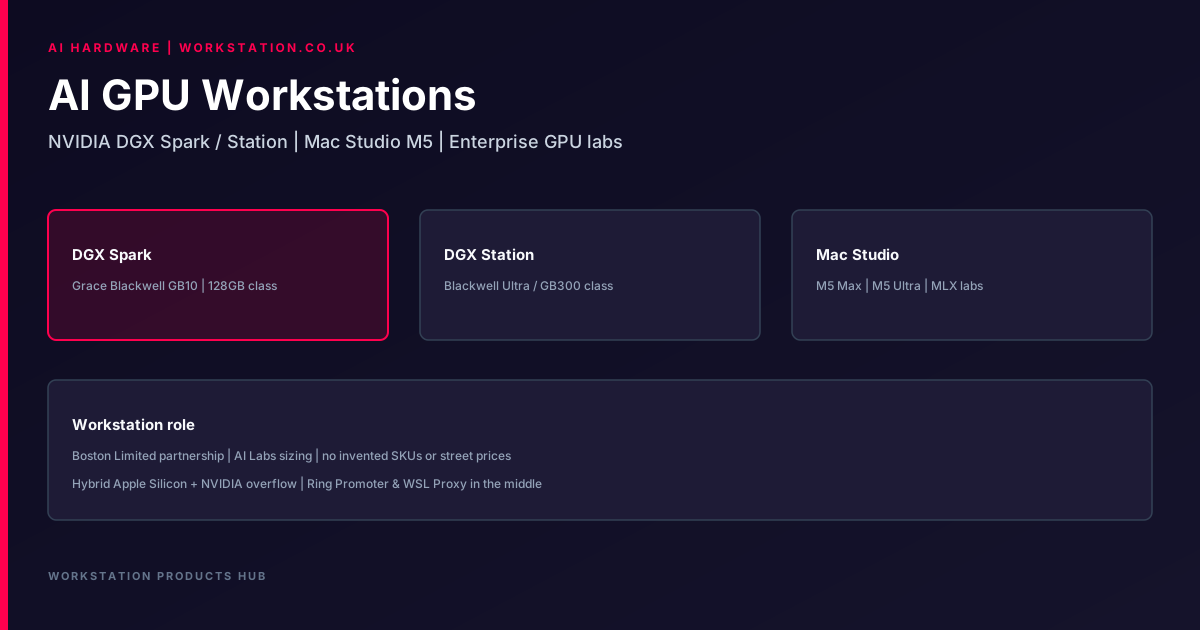
How Workstation maps NVIDIA DGX Spark, DGX Station, and Mac Studio M5 into AI Labs and SME packages — factual positioning, no invented prices.
Balinder WaliaRead 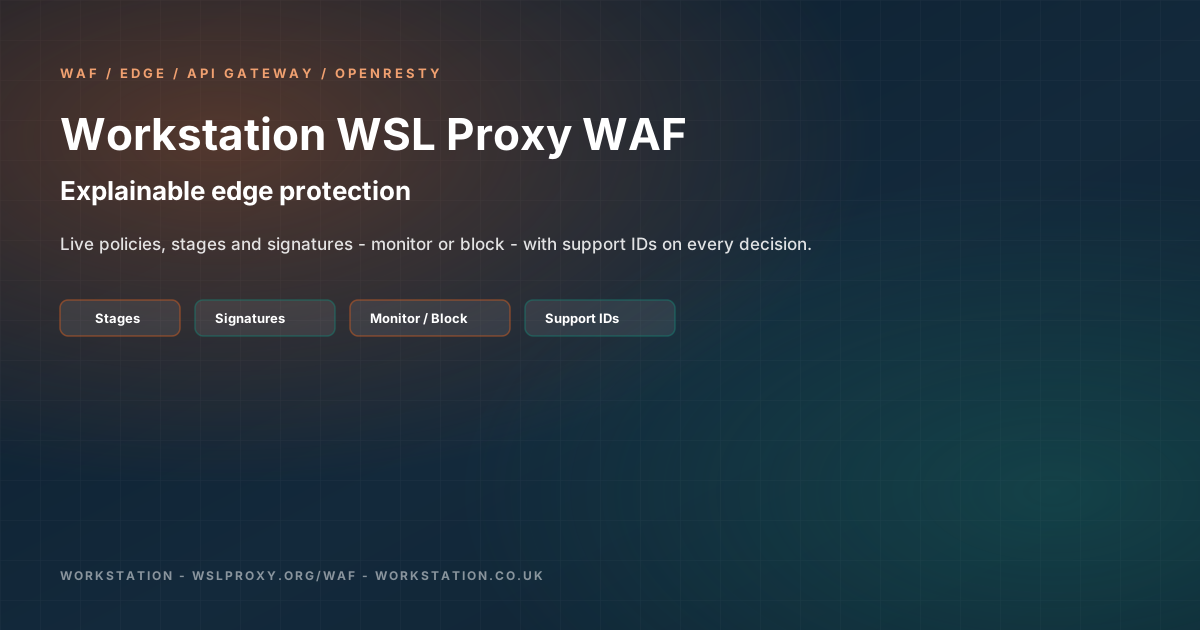
Workstation WSL Proxy WAF Engine v2: governed stages and signatures on the OpenResty hot path — explainable enforcement with support IDs.
Balinder WaliaRead Workstation WSL Proxy WAF: governed stages and signatures on a live-config OpenResty edge — monitor or block, with explainable support IDs.
Balinder WaliaRead 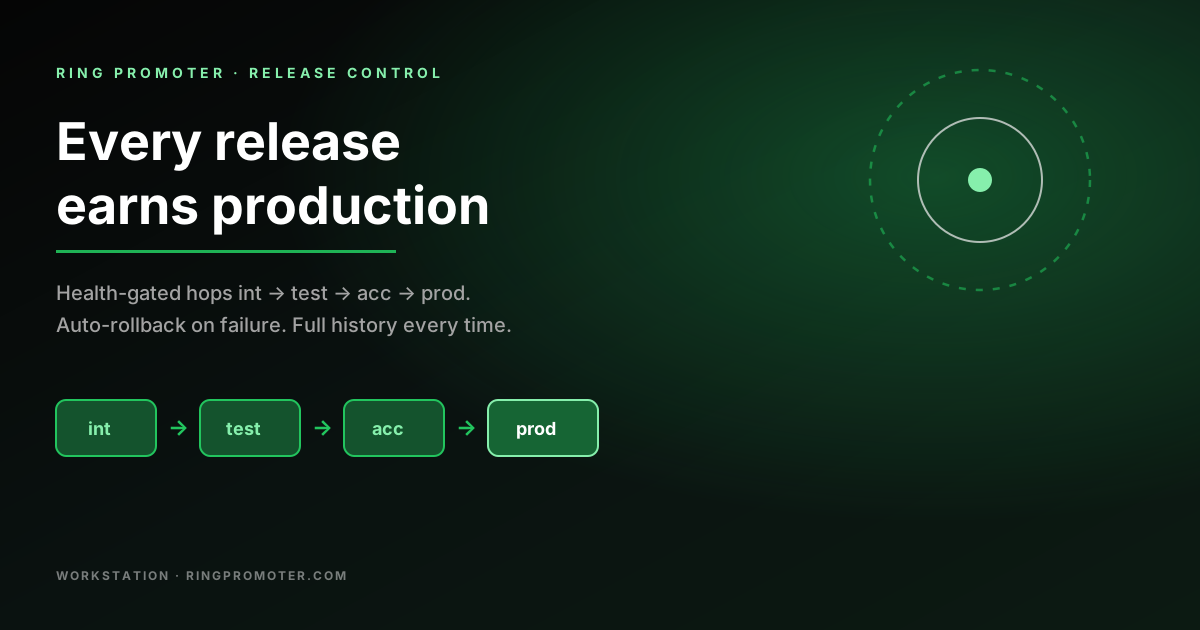
Ring Promoter makes promotion a protocol: health-gated hops through int → test → acc → prod, auto-rollback, and full history — every release earns production.
Balinder WaliaRead 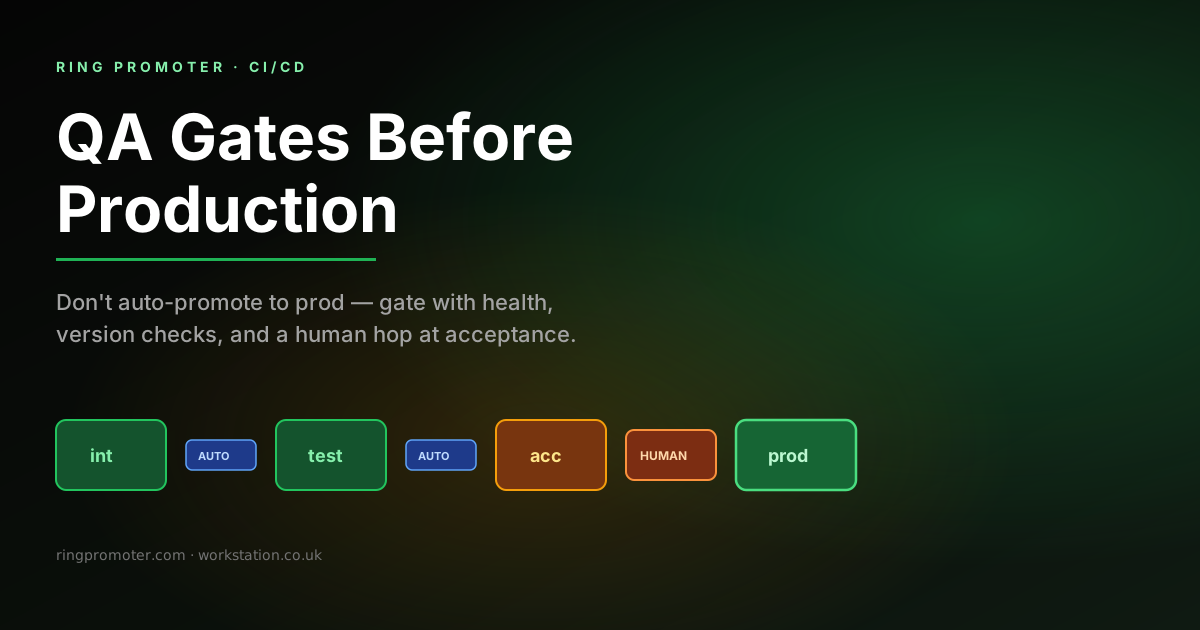
Ring Promoter QA gates: auto-promote early rings, keep a human gate before prod, and treat health plus version checks as first-class quality gates.
Balinder WaliaRead 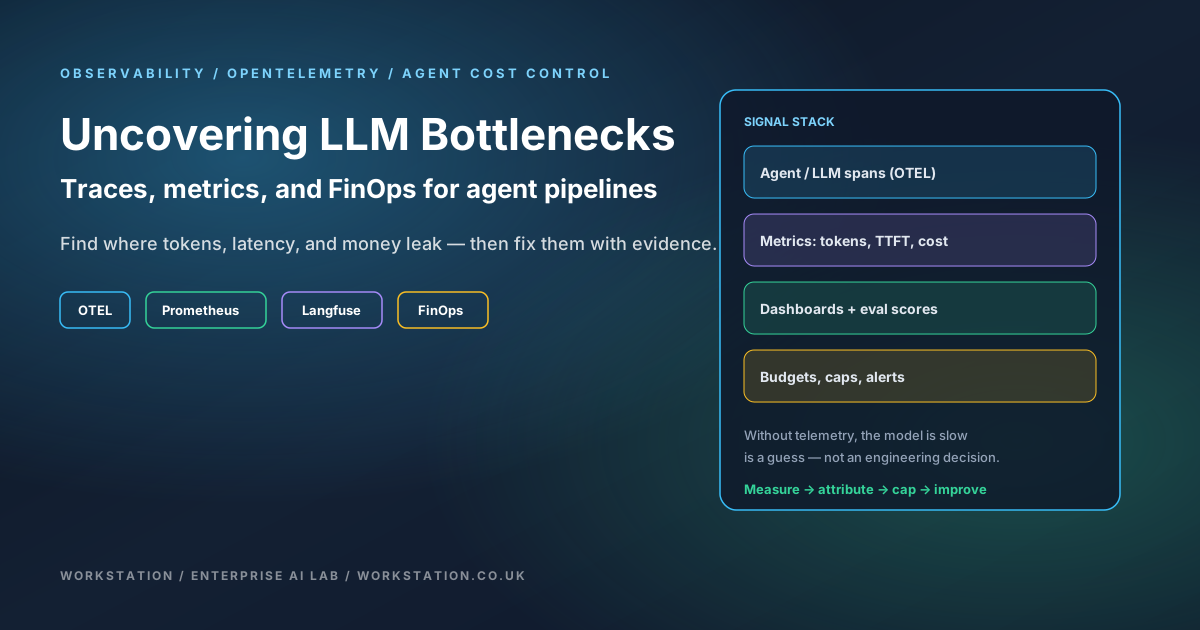
Workstation on uncovering LLM agent bottlenecks with observability: OpenTelemetry, Prometheus/Grafana/Thanos, Langfuse — with clear pros/cons, cost levers, and usage metrics that protect margins.
Balinder WaliaRead 
Workstation on turbocharging LLMs: PagedAttention paging for KV cache, vLLM serving, Self-Debugging for agents, PowerInfer token rates, and EG-MLA memory cuts — with production trade-offs.
Balinder WaliaRead 
Workstation on async Rust blocking, Rayon for CPU-bound work, and why Rust fits modern APIs, edge, agents, and CI/CD — inspired by Alice Ryhl’s Rayon guidance.
Balinder WaliaRead 
Ring Promoter is the modern CI/CD control plane for AI-powered deployments: shared rings, health gates, version verification, auto-rollback, and multi-app promote.
Balinder WaliaRead 
Workstation WSL Proxy (WSLProxy) is a complete API gateway and CDN edge: live routing, WAF, cache, multi-POP DNS, MCP — with Agents Gateway and MCP Gateway in progress.
Balinder WaliaRead 
KubePilot helps SRE, DevOps, and platform teams move from noisy cluster signals to a safe fix — CoPilot, Pilot, and AutoPilot. Open source at kubepilot.org.
Balinder WaliaRead 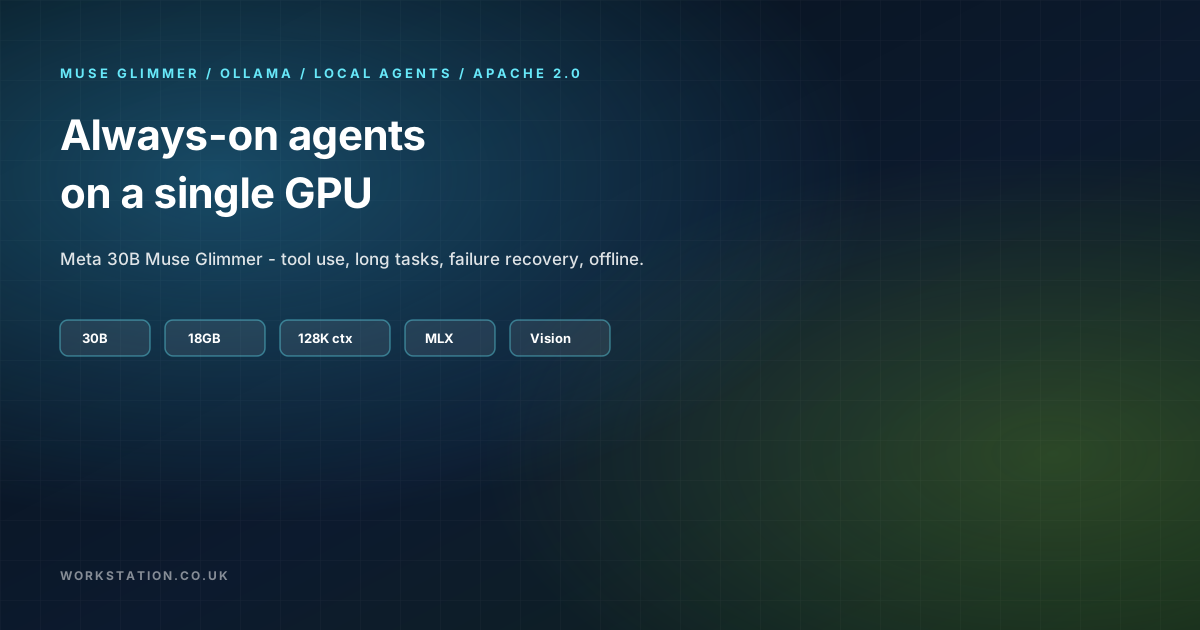
Meta Muse Glimmer brings always-on local agents to a single GPU via Ollama: 30B, Apache 2.0, 128K context, vision and tools — Workstation business guide.
Balinder WaliaRead 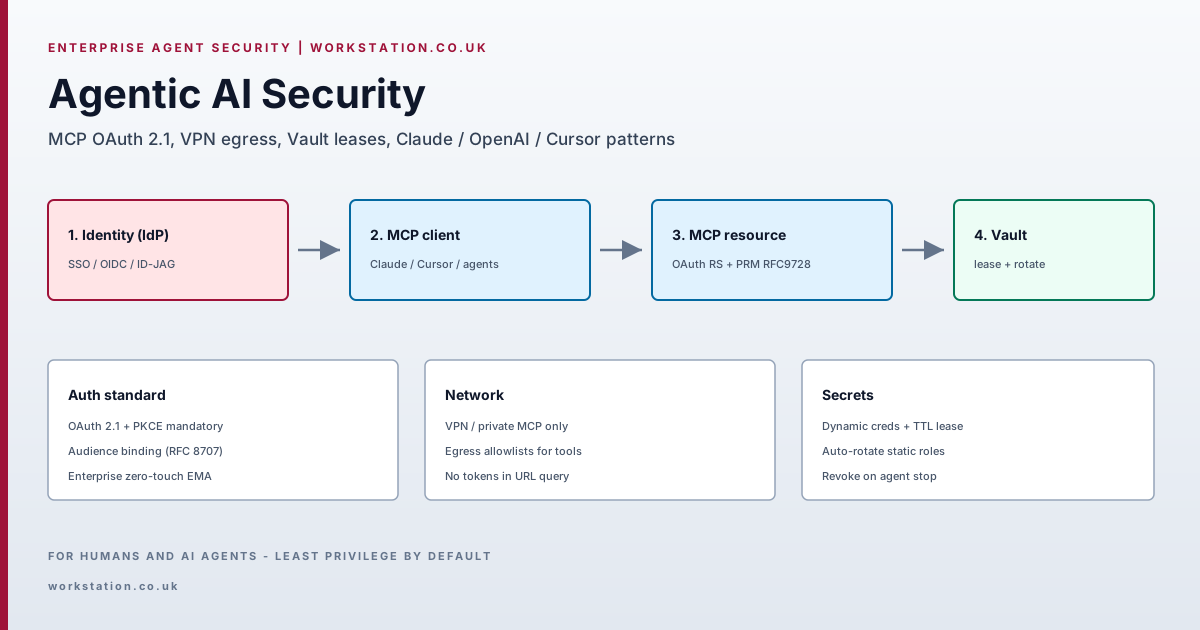
Secure enterprise AI agents with MCP OAuth 2.1, VPN-isolated tools, and HashiCorp Vault leases that auto-rotate and expire — plus Claude, OpenAI, and Cursor recommendations.
Balinder WaliaRead 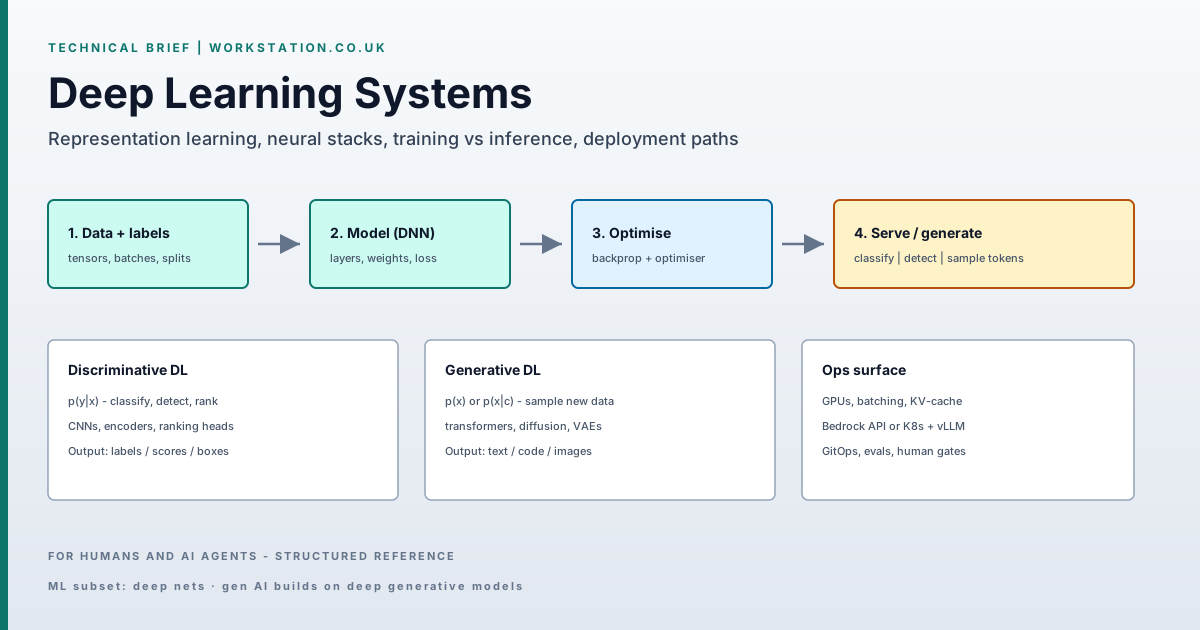
Workstation rewrite of AWS What is Deep Learning: neural networks, generative AI, vision/speech/NLP/recommendations, and how teams ship DL in the cloud or on Kubernetes.
Balinder WaliaRead 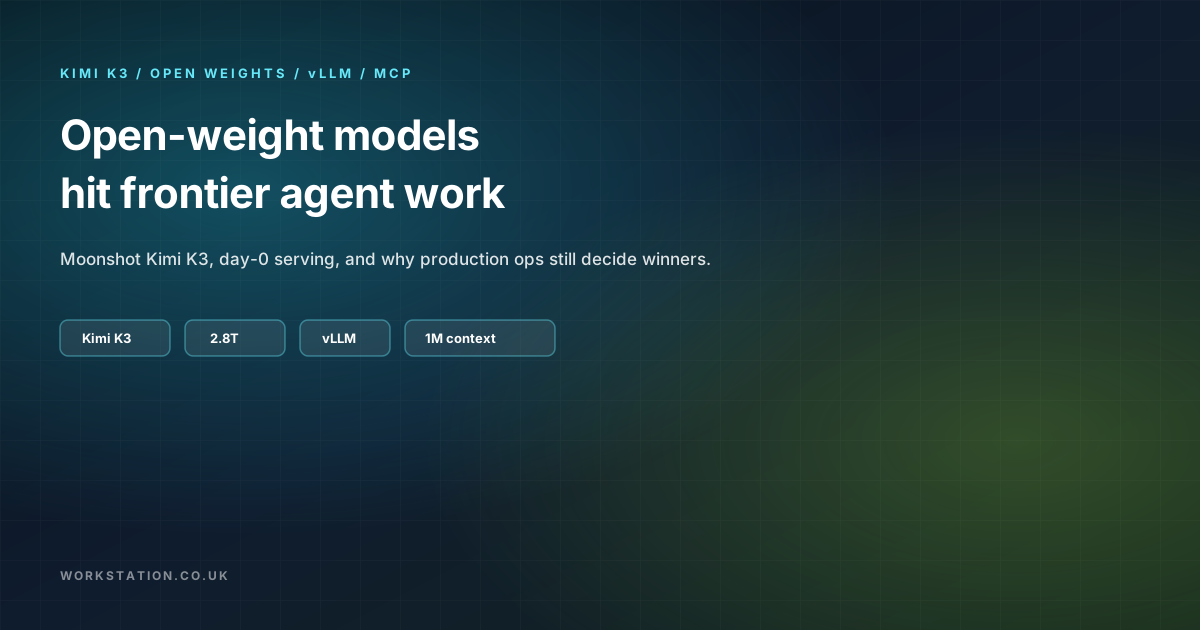
Kimi K3 pushes open-weight models into frontier agent territory. What changed for developers, vLLM serving, MCP, and Workstation production advice.
Balinder WaliaRead 
Workstation take on Claude Opus 5 on Amazon Bedrock: agentic coding, long-running agents, 1M context, ZDR by default, and how teams should adopt it.
Balinder WaliaRead 
How a wise developer works a new project — brainstorm, discuss, prototype, diagram, propose, ADR, PR, GitOps — plus Review Bots and Workstation multi-agent teams.
Balinder WaliaRead 
The wise path for a new project: brainstorm, teammate discussion, prototypes, diagrams, proposals, ADRs, small PRs with Review Bots, and GitOps for production-grade quality.
Balinder WaliaRead 
Implement Amazon Bedrock, Bedrock AgentCore, SageMaker, and Amazon Q, then launch a first business agent in Microsoft Teams — with requirements, tooling, and time boxes.
Balinder WaliaRead 
Pair Kubeflow and Argo CD for MLOps on Kubernetes: train and register models in Kubeflow, promote InferenceServices with GitOps, roll back with git revert.
Balinder WaliaRead 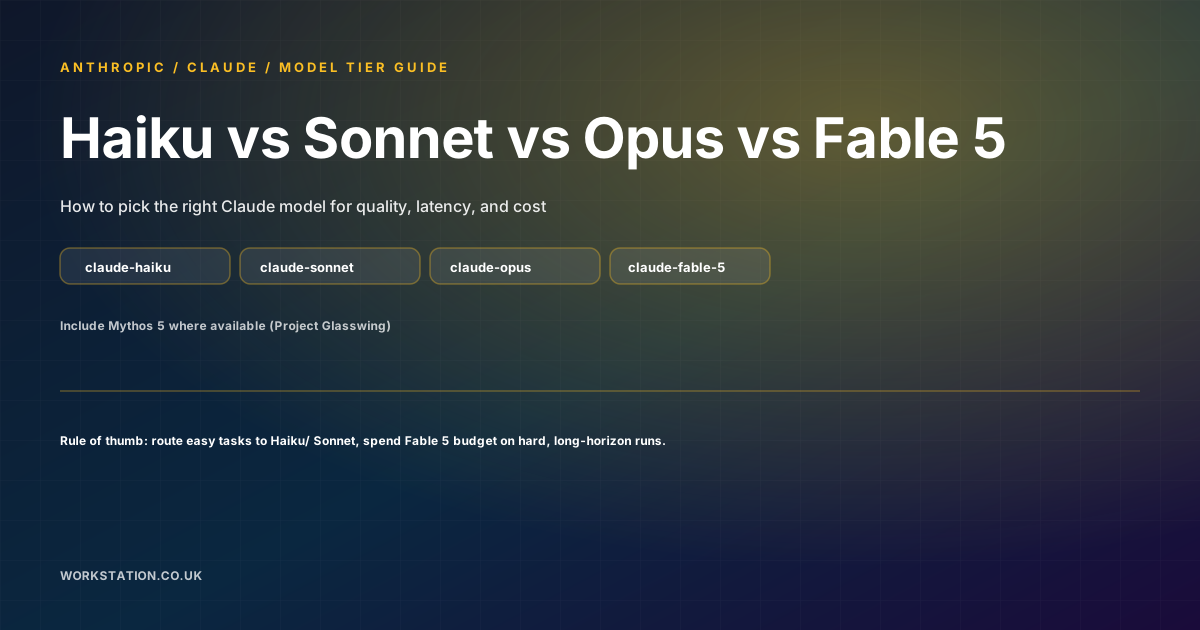
Choose the right Claude model tier: Haiku for fast routing, Sonnet for daily work, Opus for complex agentic coding, and Fable 5 for long-horizon autonomy. Includes a token-budget router blueprint.
Balinder WaliaRead 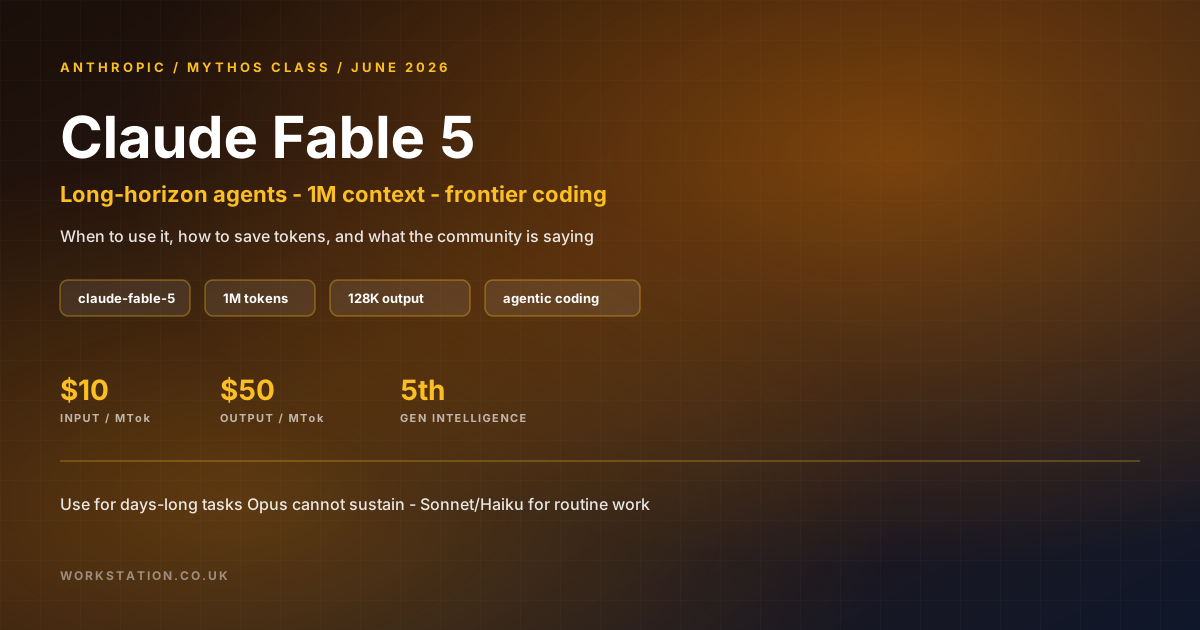
Claude Fable 5 is Anthropic's Mythos-class frontier model for long-horizon agents. Community reactions, YouTube reviews, when to use it, and how to save tokens.
Balinder WaliaRead 
What are Large Language Models and how do they work? A clear, non-technical explainer for managers and engineers — tokens, embeddings, transformers, training and inference — plus production Kubernetes YAML to deploy your own LLM with Ollama and vLLM.
Balinder WaliaRead 
Stop default-stack bias. Polyglot Benchmarks compares njs, Lua, Python, Go, Rust, Bun, Java, and Kotlin on the same workloads — reproducible harness + live dashboard for architecture decisions.
Balinder WaliaRead 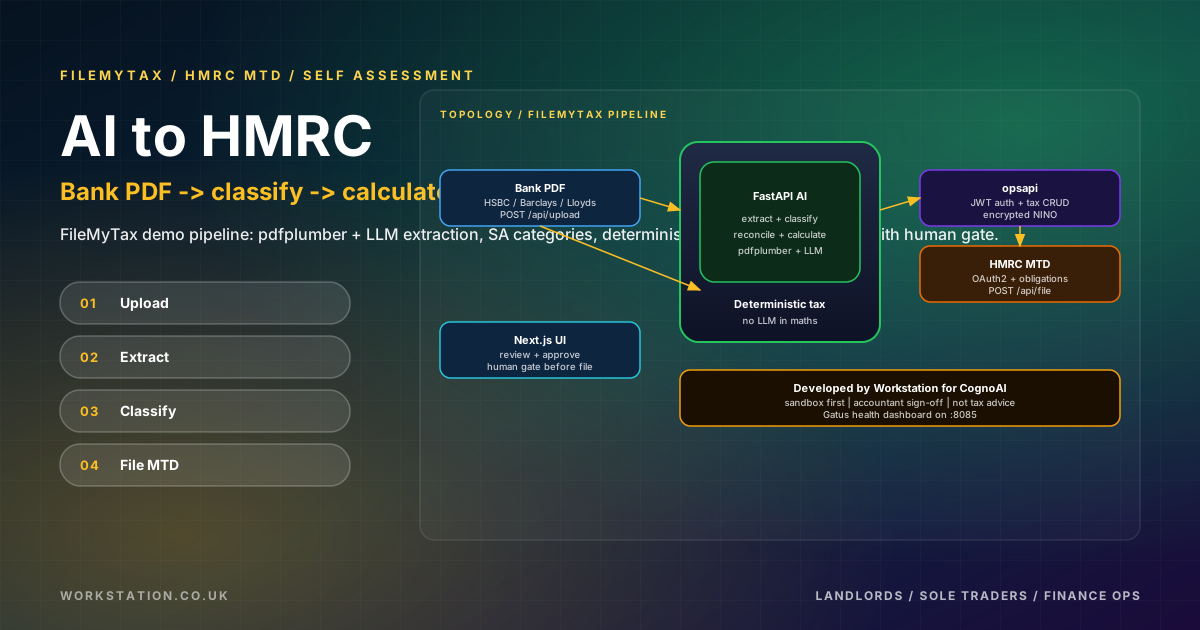
Can AI file UK Self Assessment to HMRC? FileMyTax shows bank PDF → extract → classify → calculate → MTD with a human gate. Built by Workstation for CognoAI. Not tax advice.
Balinder WaliaRead 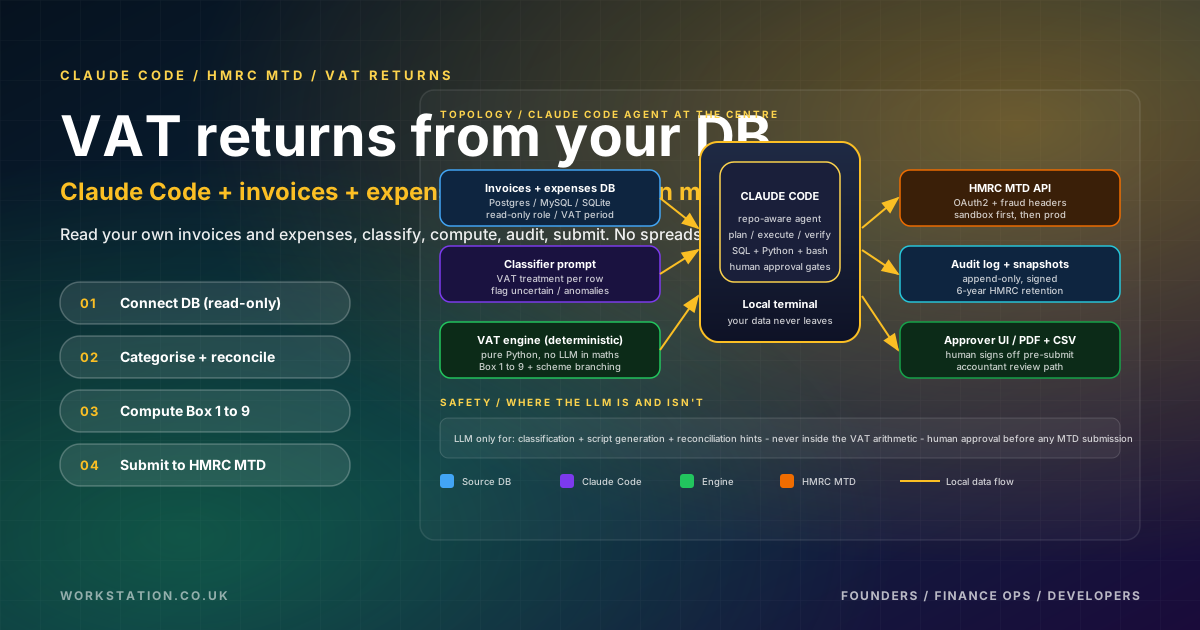
I rebuilt my quarterly UK VAT return as a Claude Code project: read invoices + expenses from Postgres, classify each line by VAT treatment, compute HMRC Box 1 to 9 with a deterministic Python engine, dry-run, then submit to MTD with a human approval gate.
Balinder WaliaRead 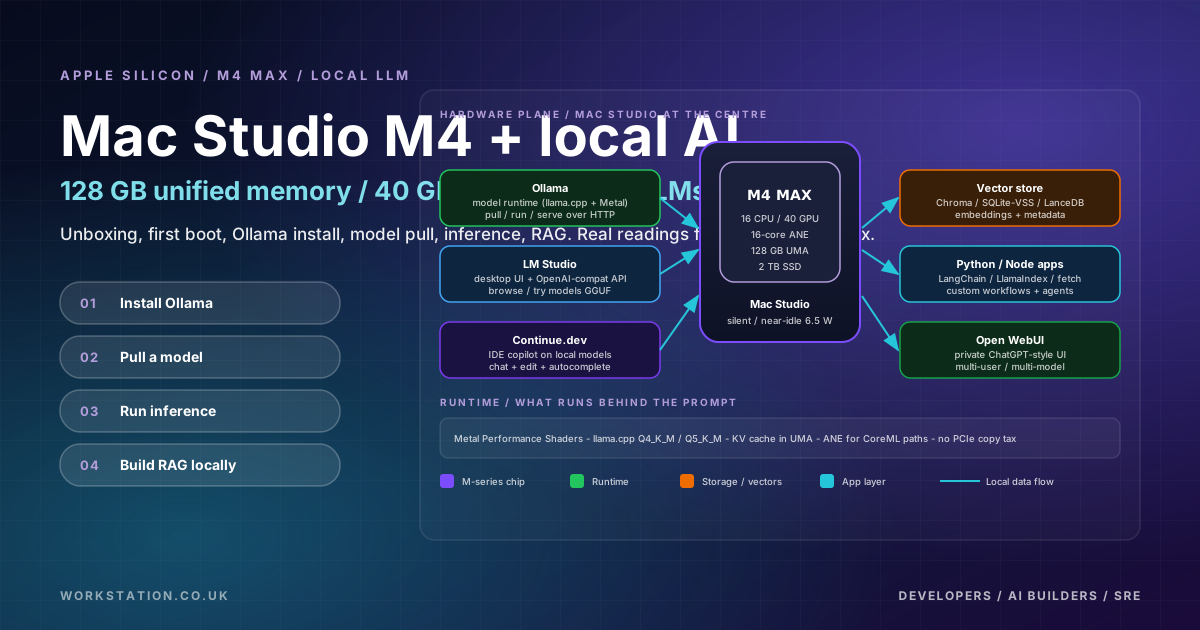
I unboxed a Mac Studio M4 Max with 128 GB unified memory and 40 GPU cores, installed Ollama, ran Llama 3.1 8B locally, and built a private RAG pipeline - all on one quiet, 6.48 W idle desk-side box.
Balinder WaliaRead 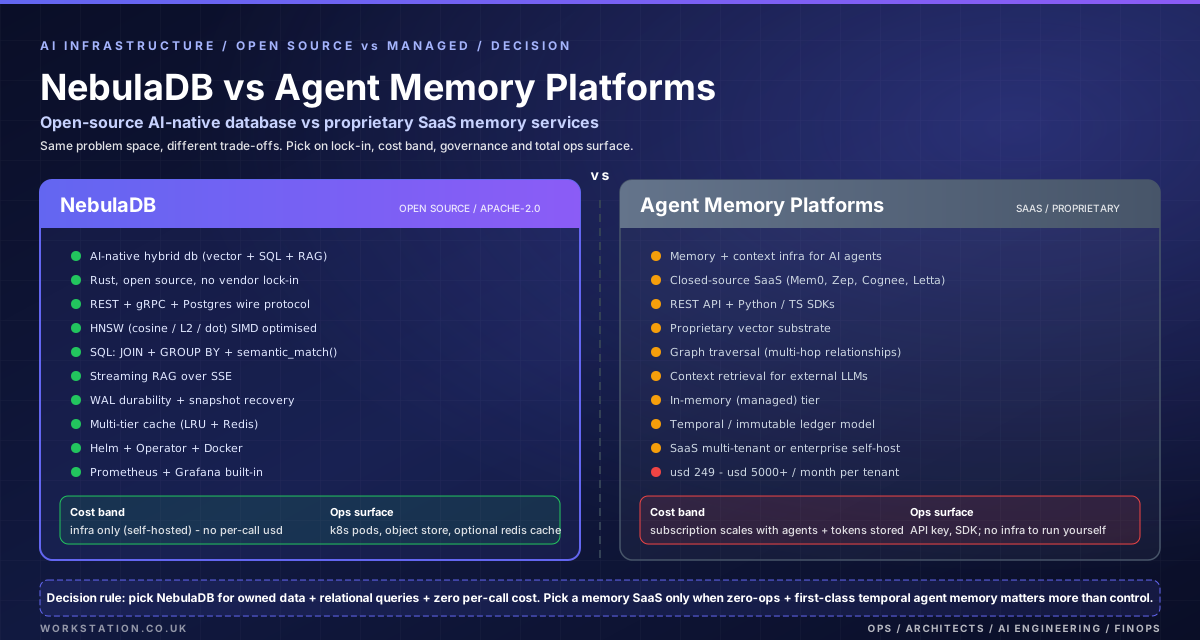
A comprehensive comparison of NebulaDB — an open-source AI-native hybrid database written in Rust — against the category of agent memory platforms. Discover why NebulaDB's multi-protocol architecture, SQL-native vector functions, and streaming RAG pipeline make it the superior choice for most AI workloads.
Balinder WaliaRead 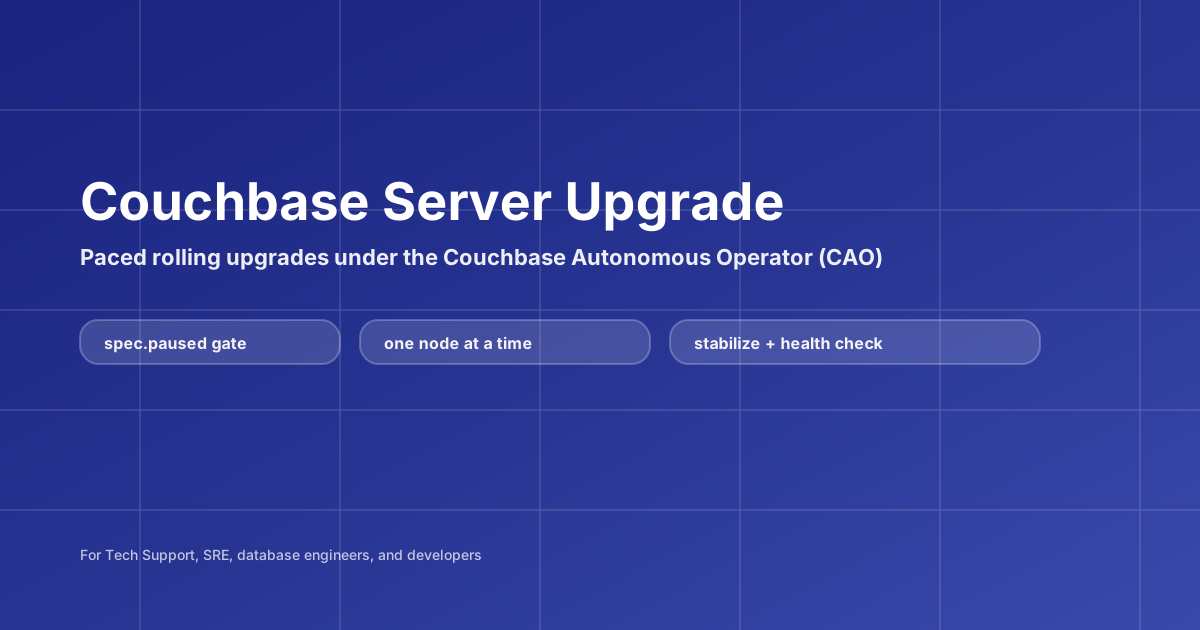
A support-friendly, SRE-ready overview of Couchbase Server rolling upgrades under the Couchbase Autonomous Operator (CAO), using spec.paused to gate swap-rebalance one node at a time—so you can stabilize, validate health, and keep rollback options open.
Balinder WaliaRead 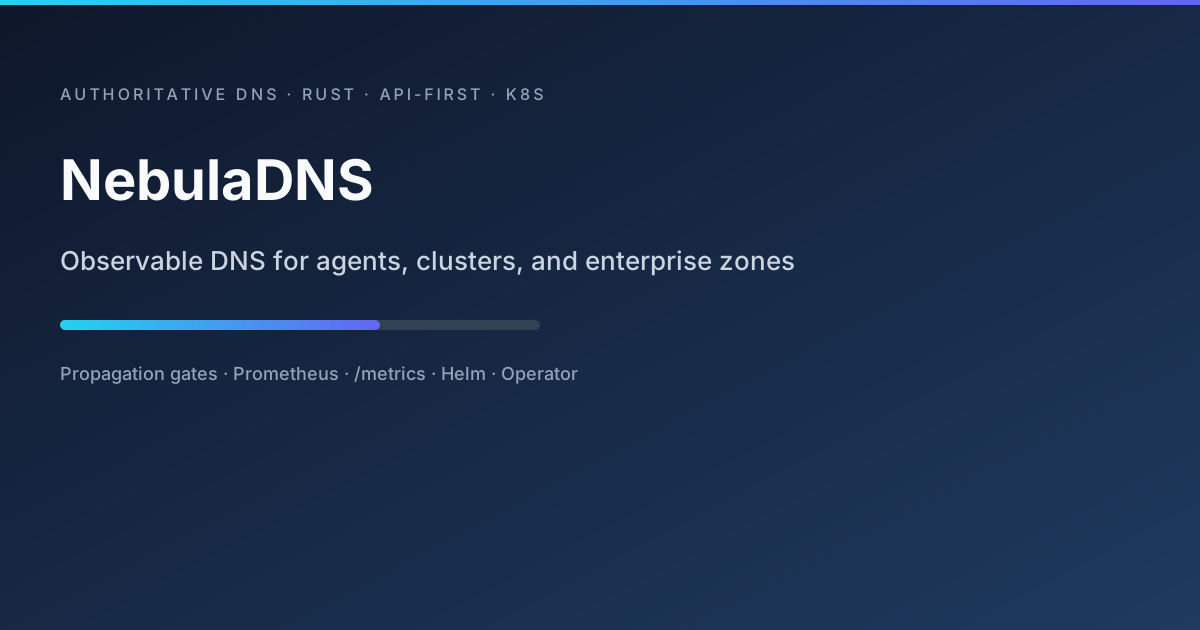
Complete tour of NebulaDNS features: API-first control plane, Prometheus metrics, propagation gates, peer fingerprinting, DNSSEC roadmap, Helm/k3s operator story, and how to integrate with AWS Route 53 and CoreDNS.
Balinder WaliaRead NebulaDNS is a safe-Rust authoritative DNS server with an API-first control plane, Prometheus metrics, propagation gates, and Kubernetes-native operations—built for visibility when AI services and agents depend on DNS more than ever.
Balinder WaliaRead 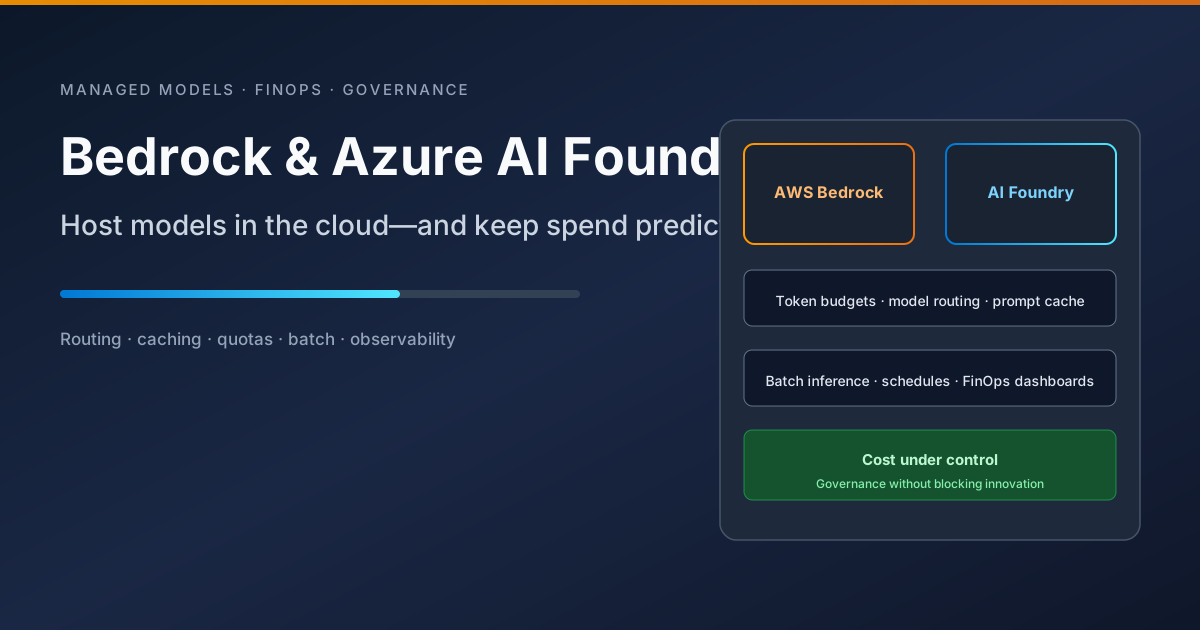
Run production AI on AWS Bedrock and Azure AI Foundry with clear patterns for model choice, caching, batching, quotas, and FinOps—so innovation does not blow the cloud bill.
Balinder WaliaRead 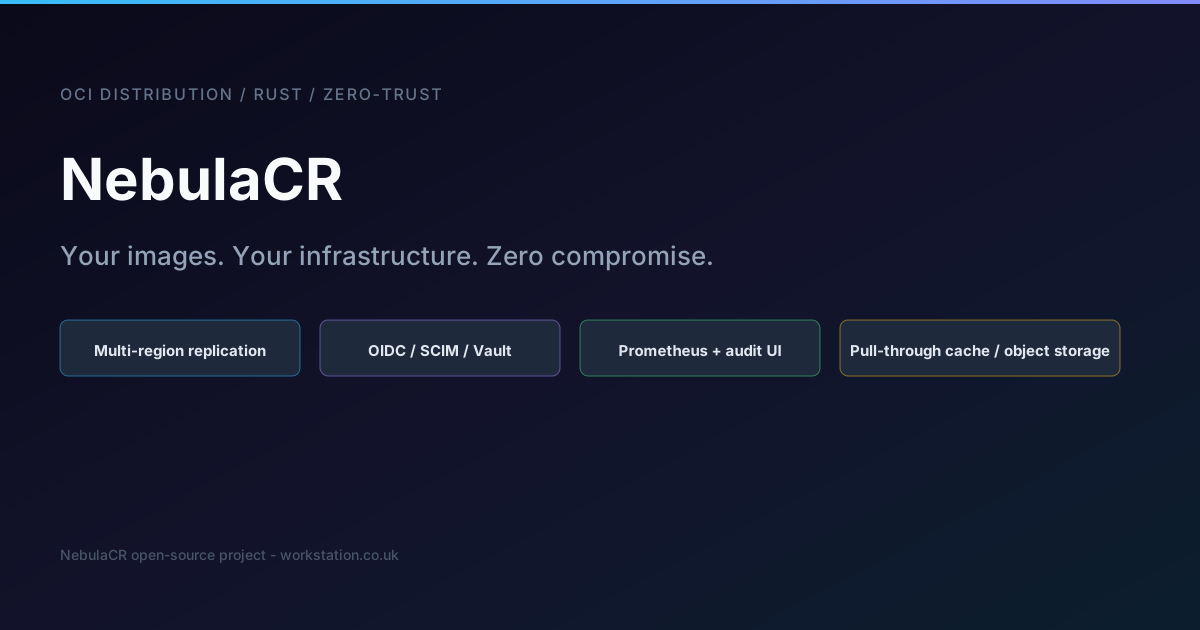
Professional overview of NebulaCR: Rust OCI registry with nebula-registry and nebula-auth, zero-trust OIDC for humans and CI, SCIM lifecycle, Prometheus and OpenTelemetry, multi-region replication, pull-through cache, and Kubernetes Helm deployment—synthesised from the upstream docs/ and README.
Balinder WaliaRead 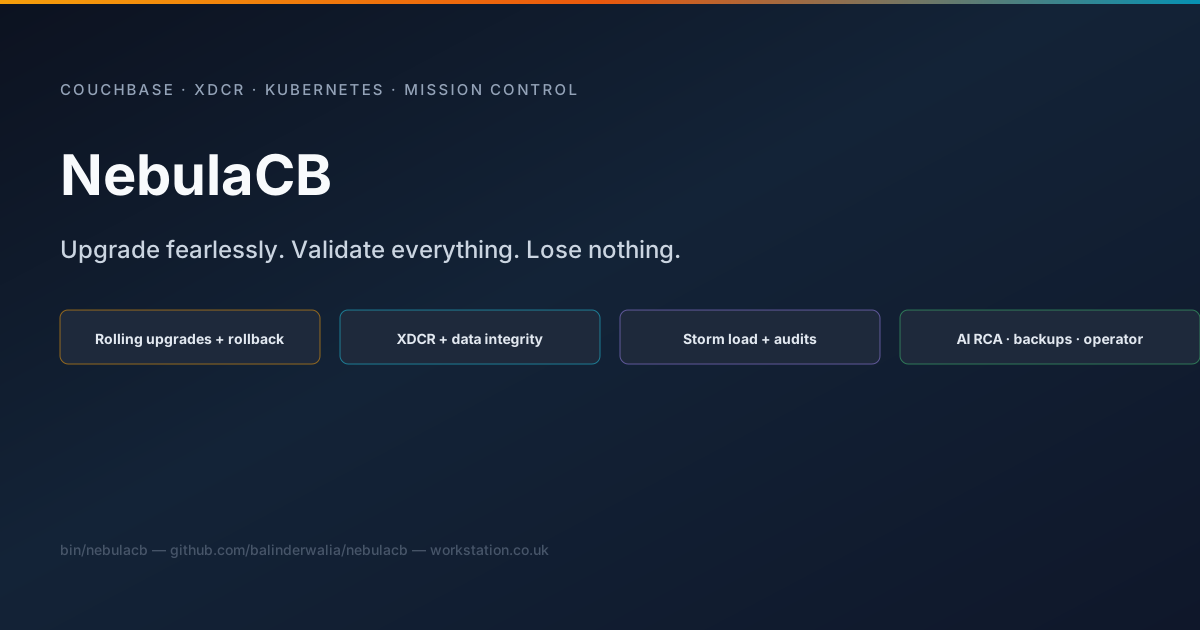
How NebulaCB, the open-source Couchbase mission control from nebulacb.org, helps enterprises upgrade fearlessly, validate XDCR and data integrity, run Kubernetes-native operations, and use local AI (Ollama) for RCA—so teams ship changes without losing data or sleep.
Balinder WaliaRead 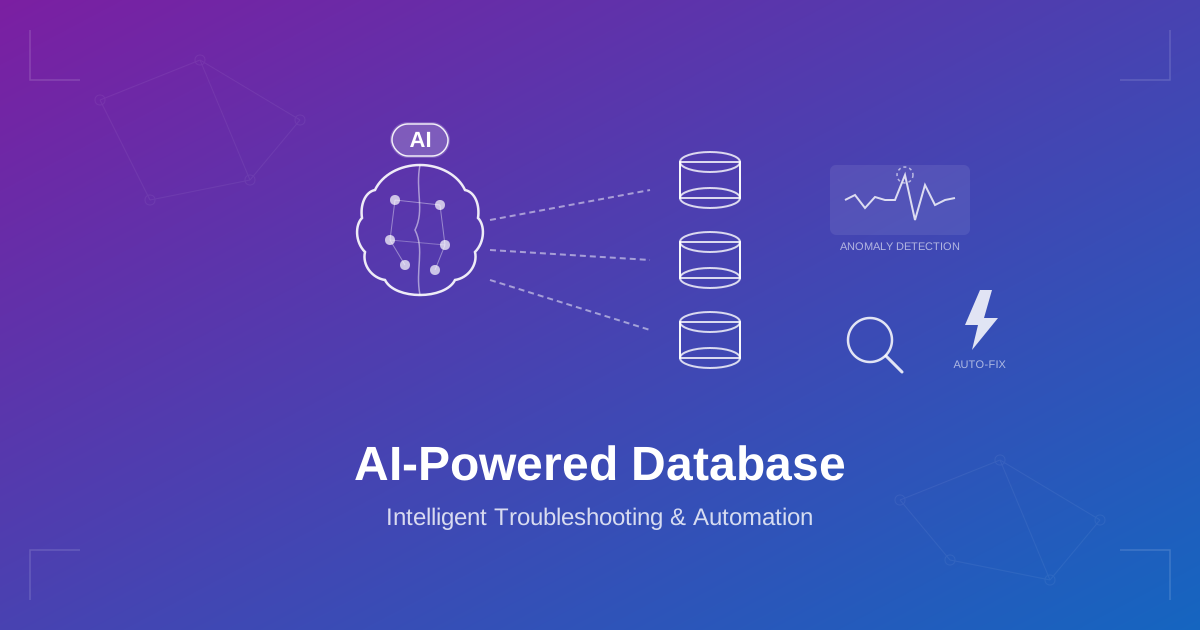
Leverage AI and machine learning for automated database troubleshooting, anomaly detection, query optimization, and intelligent alerting across MySQL, PostgreSQL, MongoDB, Redis, and Couchbase in production environments.
Balinder WaliaRead 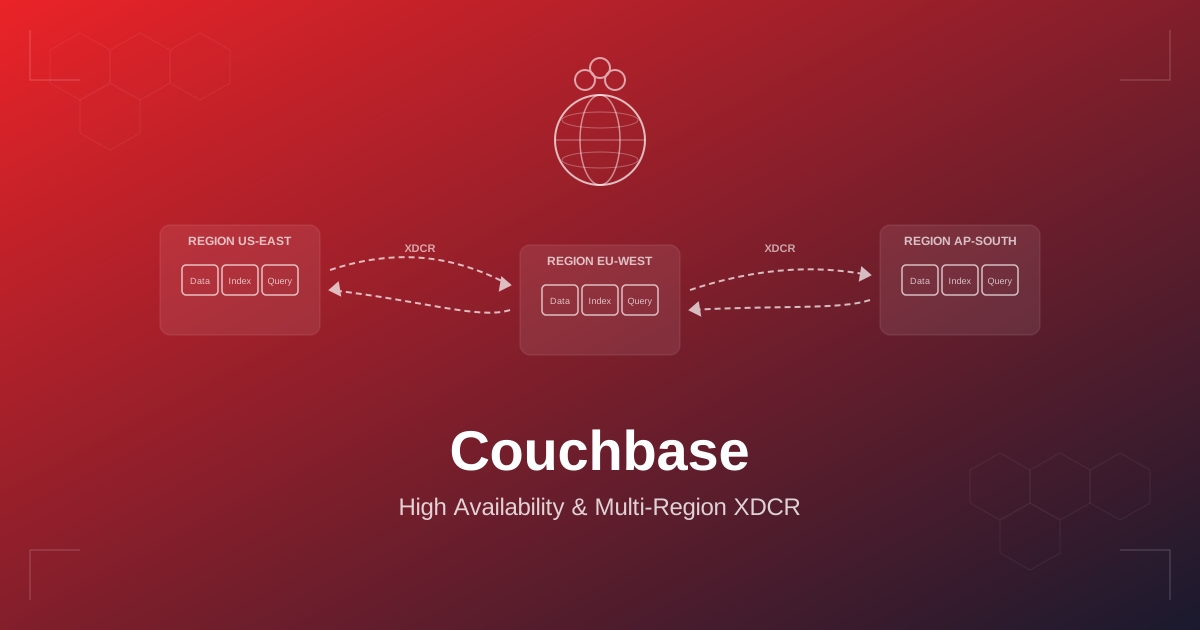
Complete guide to running Couchbase Server in high availability production environments with XDCR multi-region replication, Couchbase Autonomous Operator on Kubernetes, across AWS, Azure, GCP, and bare metal k3s with Rancher.
Balinder WaliaRead 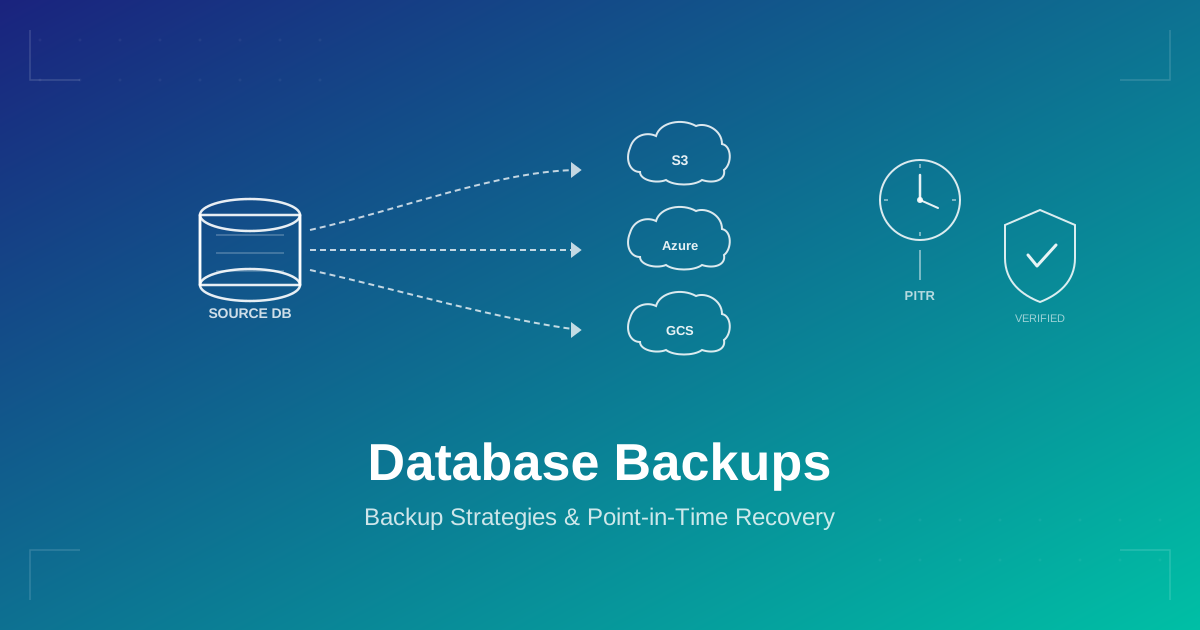
Battle-tested database backup strategies for MySQL and PostgreSQL in production. Covers physical and logical backups, PITR, WAL archiving, automated scheduling, cloud storage, and disaster recovery across AWS, Azure, GCP, and k3s.
Balinder WaliaRead 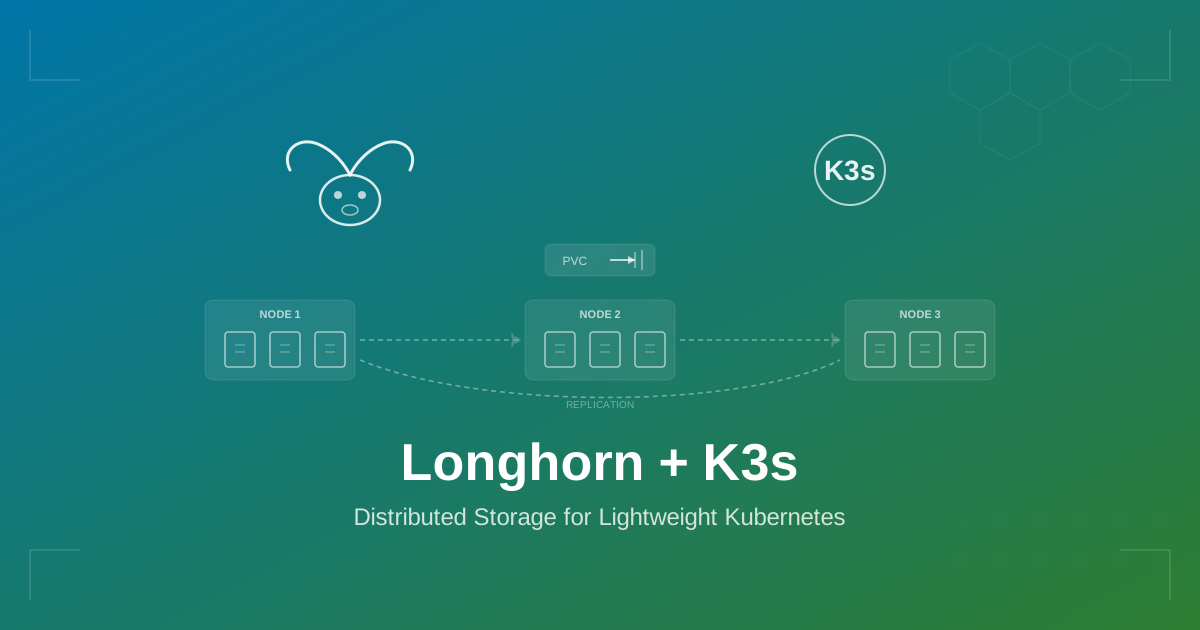
Complete production guide for Longhorn distributed storage on k3s/Rancher clusters. Covers dynamic PVC expansion, multi-region replication, backup to S3/GCS/Azure, disaster recovery, and performance tuning for database workloads.
Balinder WaliaRead 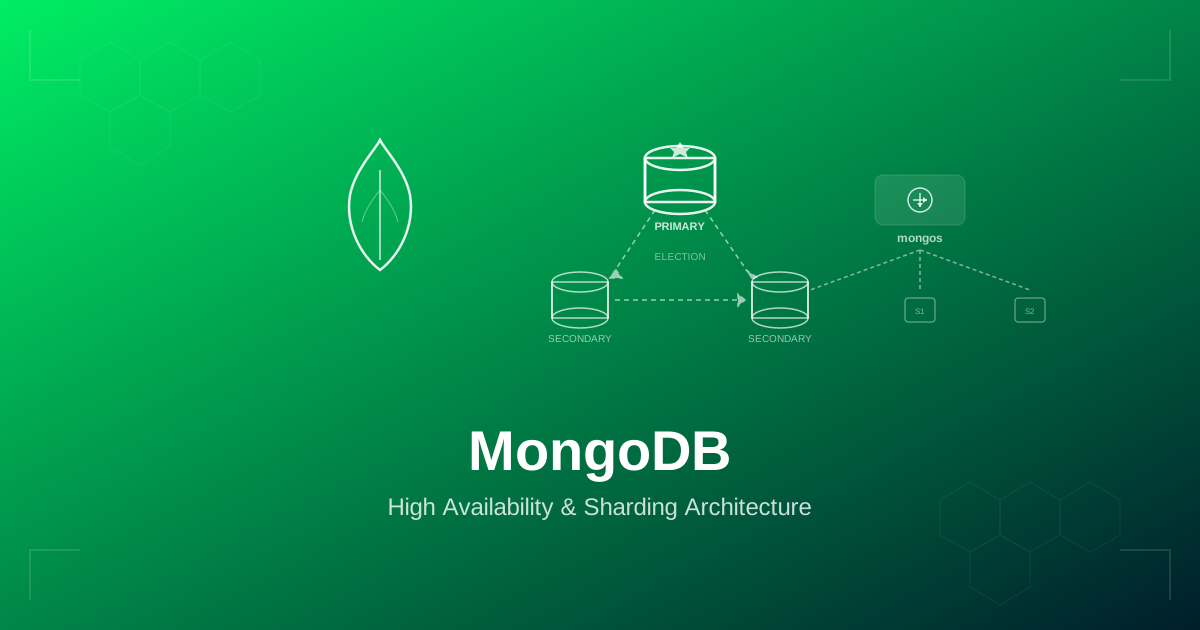
Complete production guide for MongoDB high availability using Replica Sets, Sharding, MongoDB Community Kubernetes Operator, and Percona Operator across AWS, Azure, GCP, and bare metal k3s with Rancher.
Balinder WaliaRead