
Deep Learning Systems: Technical Brief for Engineers & Agents
Representation learning, discriminative vs generative paths, metrics, and buy/build routing — AWS concepts rewritten for production teams
 Balinder WaliaAugust 7, 20261 min read
Technical digest: deep learning as multi-layer neural optimisation, discriminative vs generative paths, and how to route work to classic ML, trained DL, or foundation-model APIs. Full equations, figures, and agent checklist in the long article.
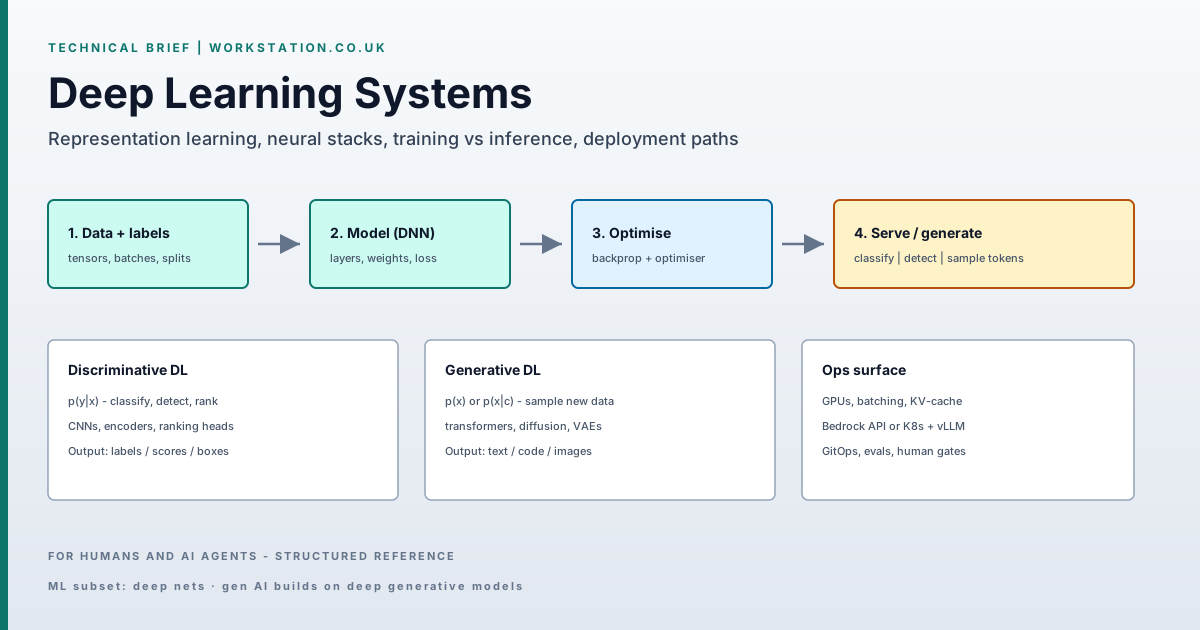
Definition. Deep learning is gradient-based training of deep neural nets so f_θ(x) learns hierarchical features from high-dimensional x. It underpins modern vision/ASR/NLP and is the substrate of generative AI (transformers / diffusion). Cost drivers: clean data volume, accelerator time, and inference OpEx — not slideware.
Agent digest. DL ⊂ ML. Discriminative = p(y|x). Generative = sample x or x|c. Prefer GBM for strong tabular features; train DL for perception; use Bedrock/vLLM for language agents. GitOps serving; gate money/auth/prod.
Adapted from AWS — What is Deep Learning? — for Workstation engineering teams.
Capability split
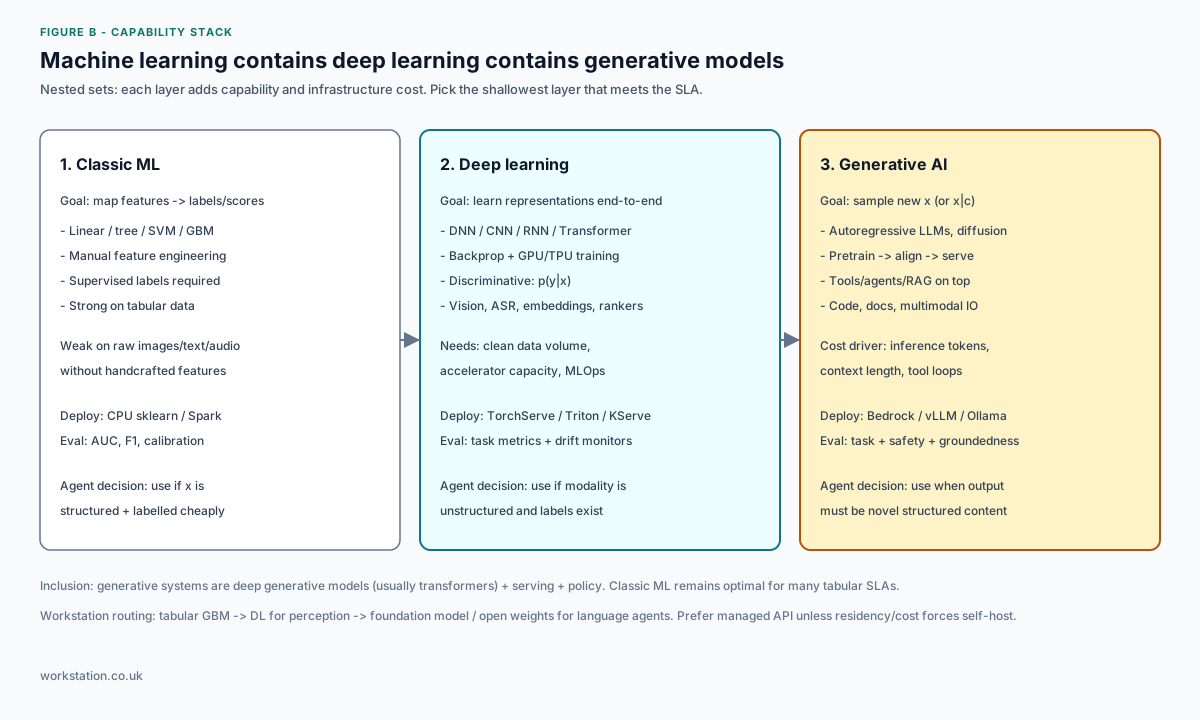
- Classic ML — engineered features; trees/linear models; best default for dense tabular SLAs.
- Deep learning — end-to-end nets on images/text/audio; backprop + GPUs; serve via Triton/KServe/SageMaker.
- Generative AI — sample new content; LLMs/diffusion + RAG/tools; Bedrock API or open-weight inference.
Task families (metrics matter)
| Family | Typical objective / metric |
|---|---|
| Vision | detect/classify — mAP, IoU, p99 latency |
| Speech | ASR/TTS — WER, real-time factor |
| NLP | classify / generate — F1, exact-match, groundedness |
| Recommend | rank — NDCG, CTR/CVR |
| Gen AI agents | task success + safety + $/request |
Constraints
- Data — label noise and shift dominate; version datasets.
- Compute — training and LLM decode are accelerator-bound.
- Ops — eval harness, drift, cost, GitOps rollback before wide promote.
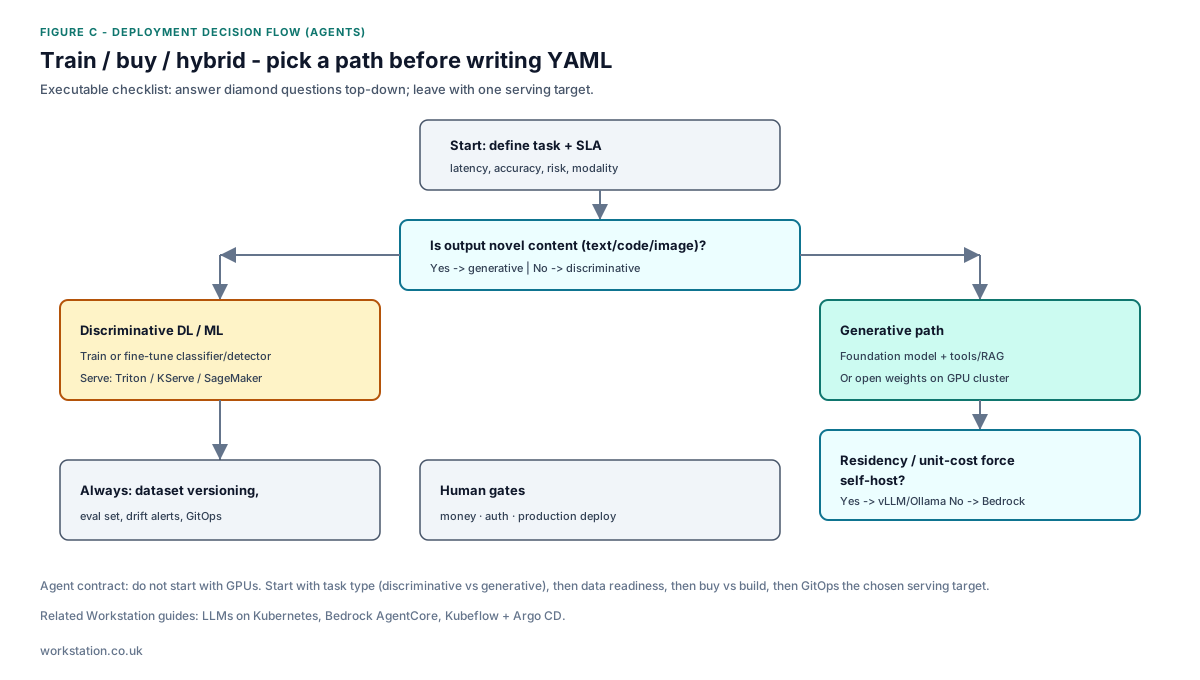
Workstation recommendation
Classify discriminative vs generative first. Prefer managed foundation models for language agents unless residency/cost forces open weights. Keep classic ML for tabular. Details, layer diagram, and checklist: long article. Published by Workstation.