WSLVault: Why AI Agents Need Cryptographic Secrets Isolation
Protect, rotate, and manage secrets for agents — plus true multi-tenancy where Team A cannot decrypt Team B
 Balinder Walia24 سبتمبر 20261 min read
AI agents do not just read secrets — they use them across tools, tenants, and long-running sessions. That is why protecting, rotating, and managing credentials is more critical for agents than for classic apps. Companion deep dive: long article · Product: /wsl-vault.
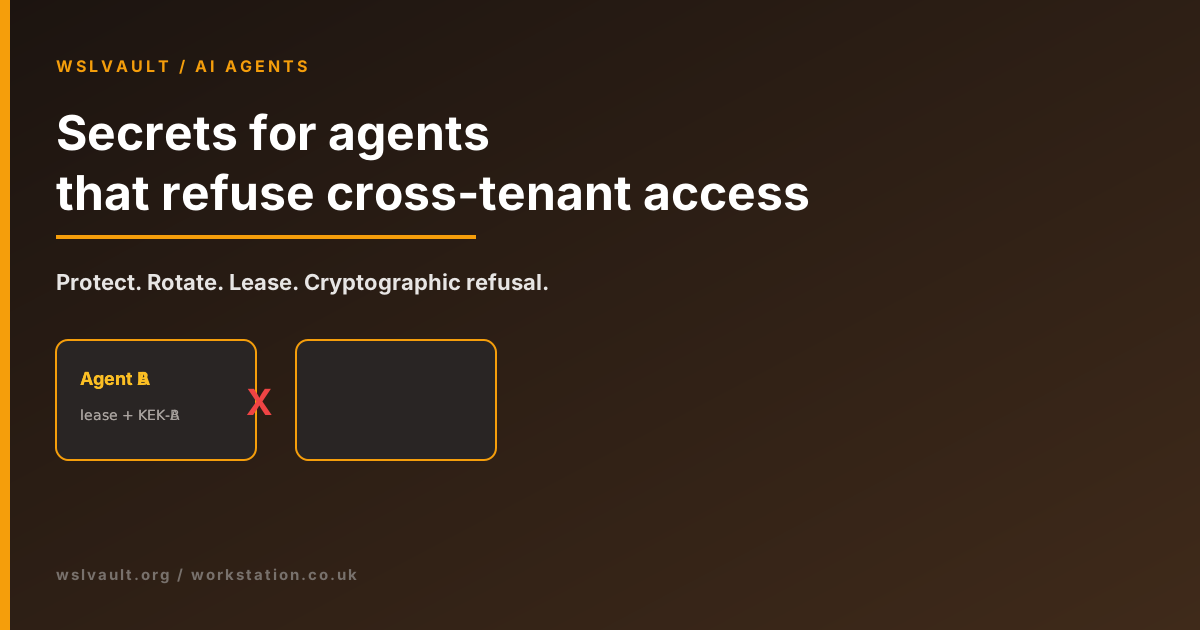
Watch on YouTube (~20 min) — same WSLVault recording, angled for multi-tenancy and platform architects.
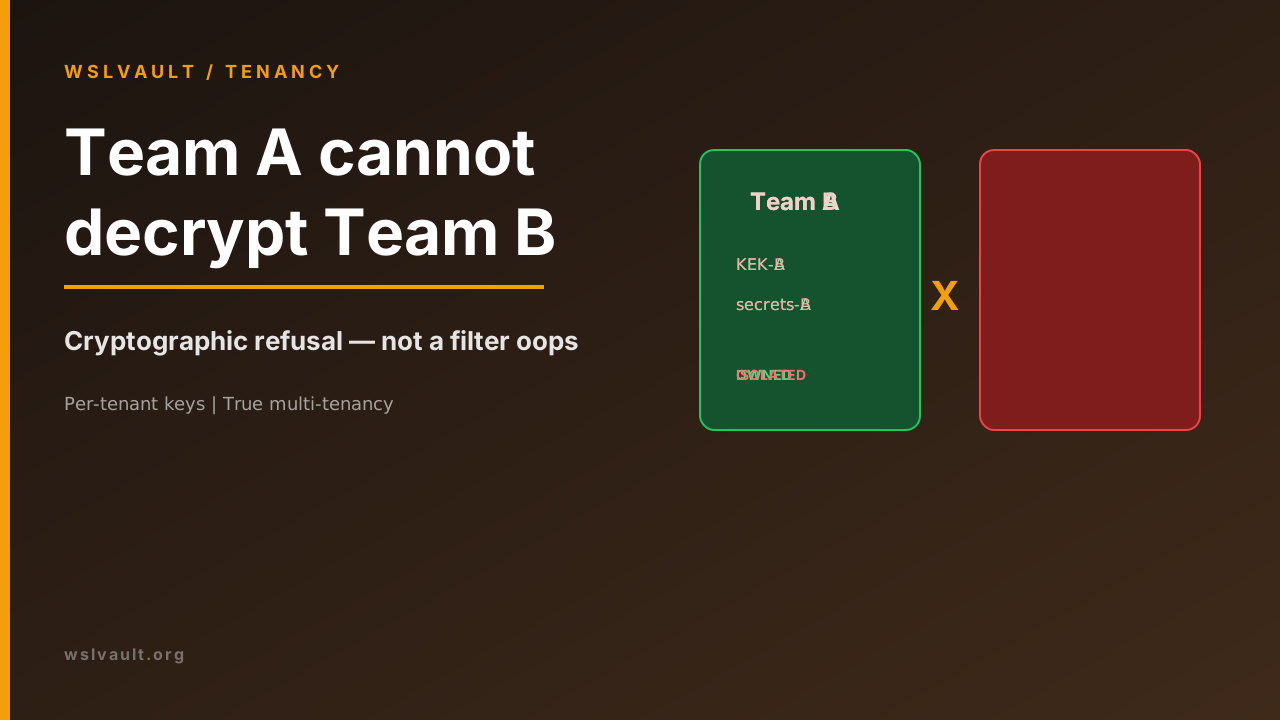
Bottom line. Most “multi-tenant vaults” isolate with application filters. That is not enough when Agent A and Agent B share a platform. WSLVault’s answer is cryptographic refusal — each data key belongs to exactly one tenant. Cross-tenant access returns not found, not “oops, wrong row.”
Why AI agents raise the stakes
- Broader blast radius — one agent session can touch many APIs, databases, and SaaS tools in minutes.
- Longer lifetime — agents hold credentials across tool loops; static keys in env files or MCP config become durable attack surface.
- Shared platforms — multi-tenant agent runtimes often share hosts, stores, and observability — a filter bug or dump must not hand Team B Team A’s plaintext.
- Automation speed — humans pause; agents do not. Leaked or over-scoped secrets get exercised at machine speed.
Protecting secrets at rest, rotating them on a schedule, and issuing short-lived leases are baseline controls for agentic systems — not optional polish.
What the video covers
- Why tenant IDs alone are cosmetic isolation
- Per-tenant key hierarchy under envelope encryption
- Cryptographic refusal vs filter bugs
- How engines (KV, transit, PKI, leases) still work per tenant
- Audit that stays tamper-evident without storing plaintext secrets
Links
- Product: wslvault.org
- GitHub: github.com/bwalia/wslvault
- Workstation page: /en/wsl-vault
- Intro article: Steal the server. Not the secrets.
Read the full technical brief · Open the WSL Vault tools page