Long-form companion to the blog. For platform and security architects shipping AI agents on shared infrastructure: why secret lifecycle is non-negotiable, and why isolation must be cryptographic — not a WHERE clause. Product: Workstation WSL Vault · wslvault.org · GitHub.
~20 min — youtu.be/O6q3_H0k2M8 · same recording angled for tenancy
1. Why protecting, rotating, and managing secrets is even more critical for AI agents
Classic apps usually fetch a small set of credentials at startup. Agents are different:
- Tool sprawl — one session may need cloud APIs, databases, ticketing, email, and MCP servers. Each credential is a live capability, not a config value.
- Session persistence — keys sitting in env files, chat context, or MCP configs outlive a single request. Without rotation and leases, compromise windows stay open.
- Autonomous action — once an agent holds a token, it will use it. There is no “wait for the human to notice” between leak and abuse.
- Multi-tenant agent platforms — Team A’s agent and Team B’s agent may share schedulers, storage, and observability. A bug or a stolen database dump must never hand one tenant the other’s plaintext.
- Compliance and audit — regulators and customers ask who accessed which secret, for which agent, and whether the trail can be tampered with.
That is why the control set for agents is stricter: protect (envelope encryption at rest), rotate (KEK/DEK and static roles on a period), and manage (identity-bound policies, short-lived leases, real revoke).
2. Why tenant IDs alone are cosmetic isolation
Most “multi-tenant vaults” isolate with application filters: WHERE tenant_id = ?. That fails closed only if every code path is perfect forever — including backups, analytics jobs, support tools, and the next junior PR.
When Team A and Team B share a platform, ask: can a bug or a stolen database dump ever hand one team the other’s plaintext? If the answer depends on a filter, the answer is yes.
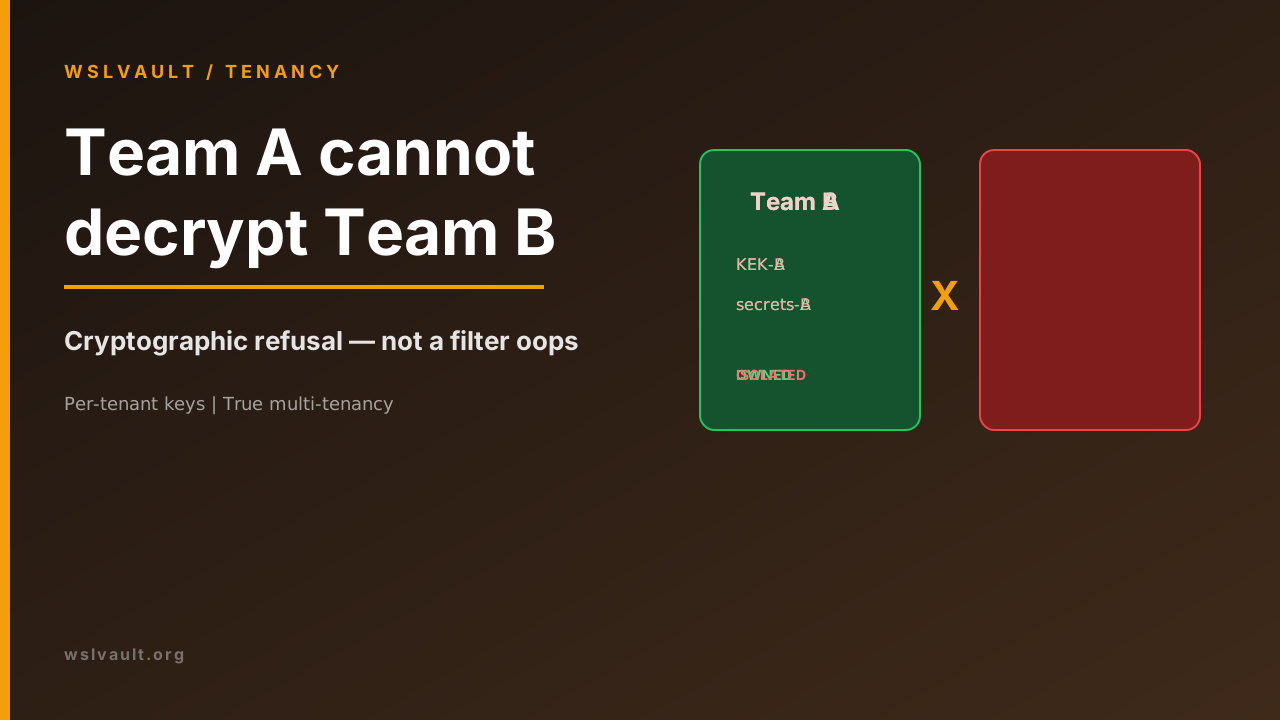
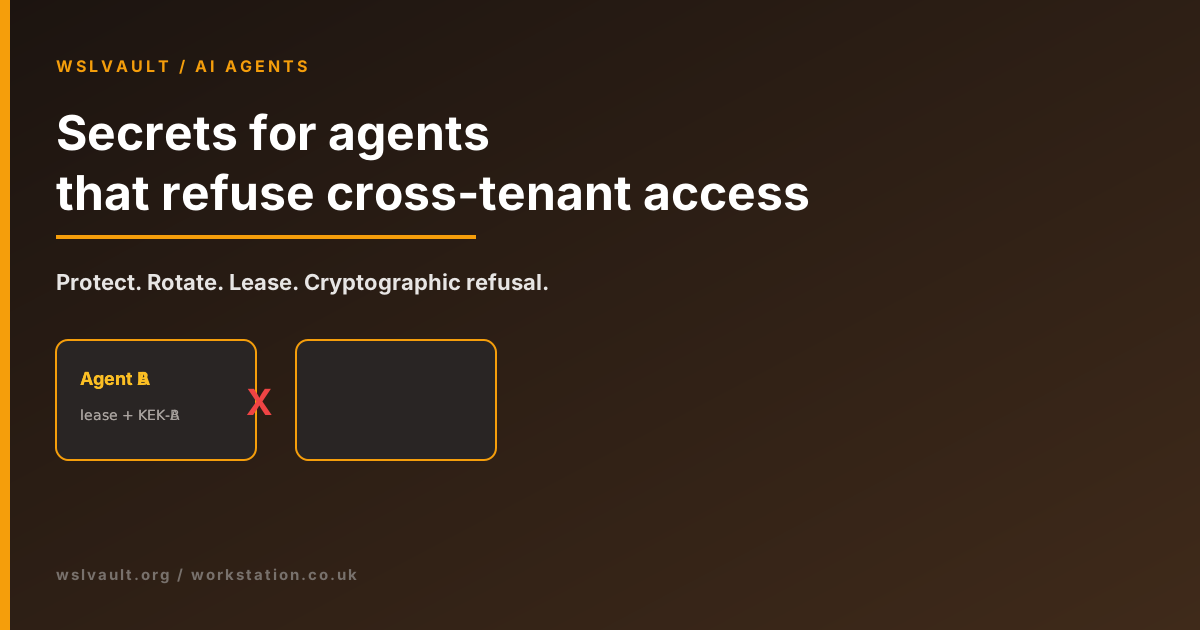
3. Cryptographic refusal — WSLVault’s answer
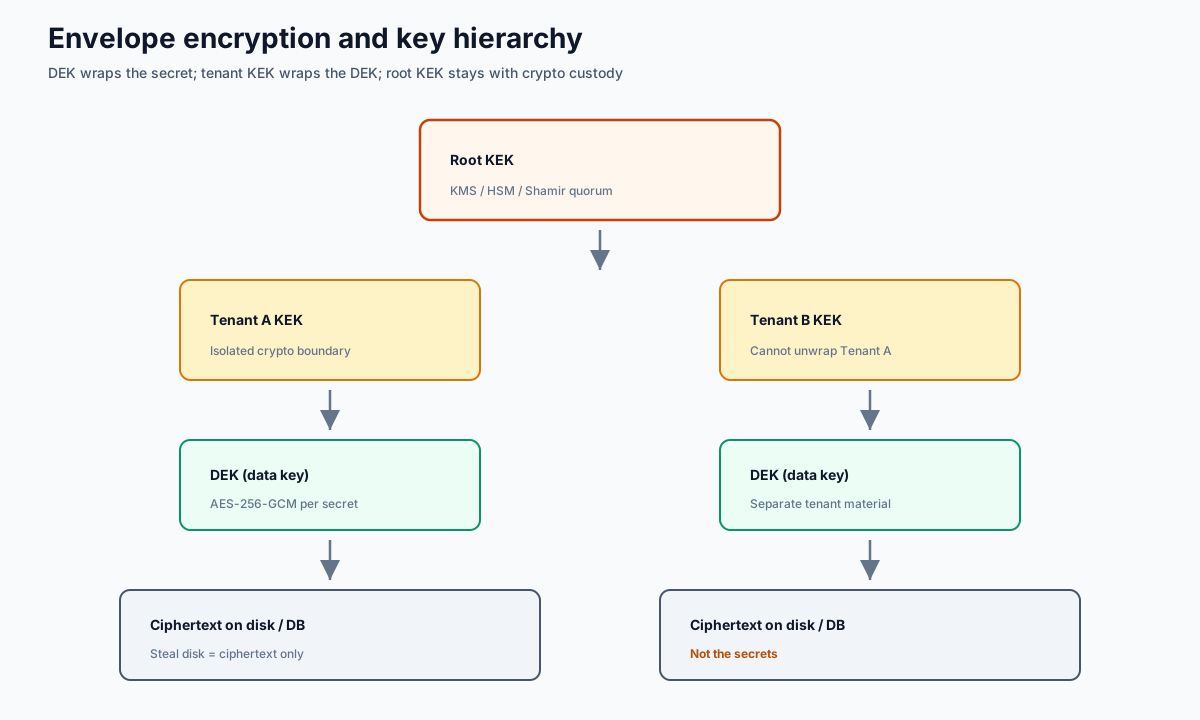
WSLVault seals every secret before storage under a per-tenant hierarchy: DEK → tenant KEK → root KEK (KMS / HSM / Shamir). Each data key belongs to exactly one tenant. A cross-tenant request returns not found, not another tenant’s row with the wrong label.
That is cryptographic refusal: Team A cannot decrypt Team B even if an upper layer misroutes an identifier. Isolation holds at the crypto service — the place filter bugs cannot quietly rewrite.
4. Engines still work per tenant
Isolation does not mean you lose Vault-compatible workflows. Per tenant you still get:
| Engine | Why agents care |
|---|---|
| KV v2 | Versioned config and API material sealed before disk — not plaintext beside the agent runtime |
| Transit | Encrypt/decrypt/sign without exporting keys into the model or tool process |
| PKI | Short-lived certs for mTLS between agent, MCP, and backends |
| Leases | Dynamic credentials with renew/revoke — stop the agent, kill the access |
5. Protect → rotate → manage (agent checklist)
- Protect — envelope encryption; root custody outside the data plane; no plaintext in backups or audit payloads.
- Rotate — rotate tenant KEKs and static roles on a period; keep old ciphertext readable via transit versioning where needed.
- Manage — identity-bound tokens (not trusted headers alone), fine-grained policies, MFA for operators, leases with real revoke for agent sessions.
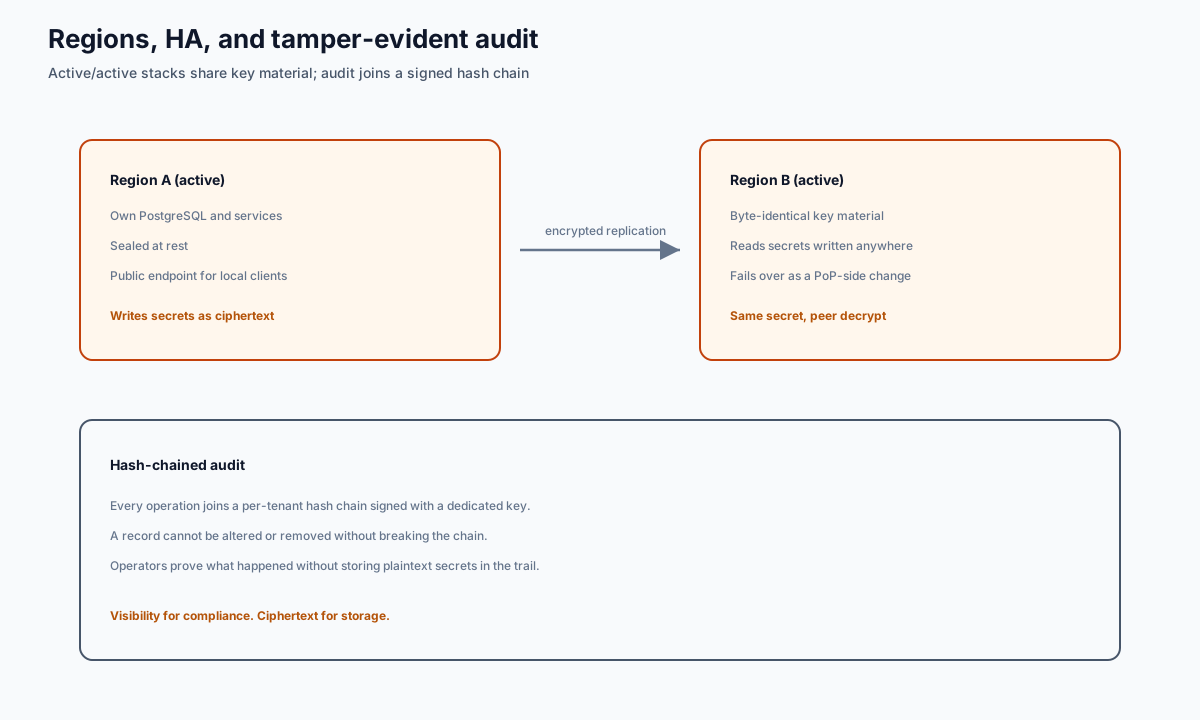
- Prove — tamper-evident, hash-chained audit per tenant so you can show who did what without storing secrets in the trail.
6. Video chapters
| Time | Topic |
|---|---|
| 0:00 | Why this matters (steal the server) |
| 1:30 | What WSLVault is |
| 3:00 | Envelope encryption and key hierarchy |
| 5:30 | Multi-tenancy that actually isolates |
| 8:00 | Console walkthrough (secrets, transit, PKI) |
| 11:00 | Identity, policies, leases and MFA |
| 14:00 | Regions, HA and audit |
| 17:00 | Deploy on Kubernetes |
| 19:00 | Where to go next |
7. Where to go next
- Site: https://www.wslvault.org/
- GitHub: https://github.com/bwalia/wslvault
- Getting started: GETTING-STARTED.md
- Workstation product page: /en/wsl-vault
- Intro brief: Steal the server. Not the secrets.
- Related: Agentic AI security — MCP, OAuth, Vault leases
Published by Workstation.